



The Science Behind the Inertia Wave®: How Oscillation Works
Kinetic energy, elastic wave motion, core stabilization, and metabolic conditioning explained.
Two Tubes. A Different Kind of Resistance.
At first glance, the Inertia Wave® looks simple: two elastic tubes, a pair of grips, and, for SOLO and STRONG, a secure anchoring system. Start moving the handles, though, and the difference becomes obvious. Instead of lifting a fixed weight or stretching a conventional resistance band through repetitions, you're creating waves that have to be sustained and controlled.
Each movement sends energy through the tubes. Their elastic properties and the changing direction of the waves create forces that you feel at the handles. Your next movement influences the wave, and the wave influences what you have to do next.
That back-and-forth interaction is the basis of Inertia Wave's oscillating resistance. Here's what is happening, and what it means for training.
How Kinetic Energy Moves Through the Tubes
Kinetic energy is the energy of motion. When you drive the handles, sections of the tubing move and possess kinetic energy. At the same time, bending and stretching the elastic material temporarily stores elastic potential energy.
The wave travels along the tubing, carrying mechanical energy. With an anchored setup, part of a wave can reflect at the far end and influence the forces you feel at the handles. Not all of that energy is returned; some is dissipated through the material and movement.
To keep a steady wave going, you repeatedly apply force, adjust your timing, and respond to changes in tension and direction. In practical terms, you have two jobs: create the wave and control it.
This is why the load doesn't feel like a fixed number of pounds. It changes with your movement, the tubing, and the setup.
What Makes Oscillating Resistance Different?
Three features help determine how an Inertia Wave exercise feels:
- Frequency: how often the waves repeat. Faster patterns demand quicker, more coordinated actions.
- Amplitude: how far the tubing moves from its resting position. Larger waves can require more effort to create and sustain.
- Tension: the baseline pull on the tubes, influenced by setup and body position.
These factors work together. Simply moving your hands faster does not guarantee a better wave. Rhythm, tension, and technique matter. When one changes, the feedback from the tubes changes too.
The physics term mechanical impedance describes how a system responds to applied forces during movement. It's a useful way of understanding the relationship between your effort and the tubing's response, but it isn't a claim that a particular setting has been scientifically proven to maximize energy transfer.
Why Your Core Is Involved
Your hands and arms create the waves, but your trunk and lower body help you stay stable as the forces change. Depending on the exercise, you may need to resist rotation, side-bending, or a forward pull while maintaining the movement.
This is often described as reactive stabilization. Rather than holding still against an unchanging load, the muscles around your trunk make ongoing adjustments. Your shoulders, grip, hips, and legs also contribute to control and posture.
There's a coordination component as well. Maintaining two clean wave patterns calls for timing and body awareness, or proprioception. You can see and feel when the rhythm breaks down.
What Does the Research Show?
Published studies of other oscillating exercise tools help explain these demands. Moreside, Vera-Garcia, and McGill examined trunk muscle activity and spinal loading during Bodyblade exercises. Arora and colleagues compared muscle activation using single and double oscillating devices. Both show that the movement and configuration of an oscillating tool can affect muscular demands.
Those studies were not performed on Inertia Wave. They offer relevant context, not direct proof that this product produces the same measurements or better outcomes than other equipment.
Metabolic Conditioning: How Wave Training Fits
Metabolic conditioning, often shortened to MetCon, uses planned work and recovery periods to challenge the body's energy systems. The aerobic and anaerobic systems both contribute during exercise; their relative roles shift with the intensity and duration of the effort.
Because you can sustain wave patterns for timed intervals and adjust the effort, Inertia Wave fits naturally into this kind of programming. A coach might use controlled waves for a warm-up, demanding intervals for conditioning, or brief rounds between strength exercises.
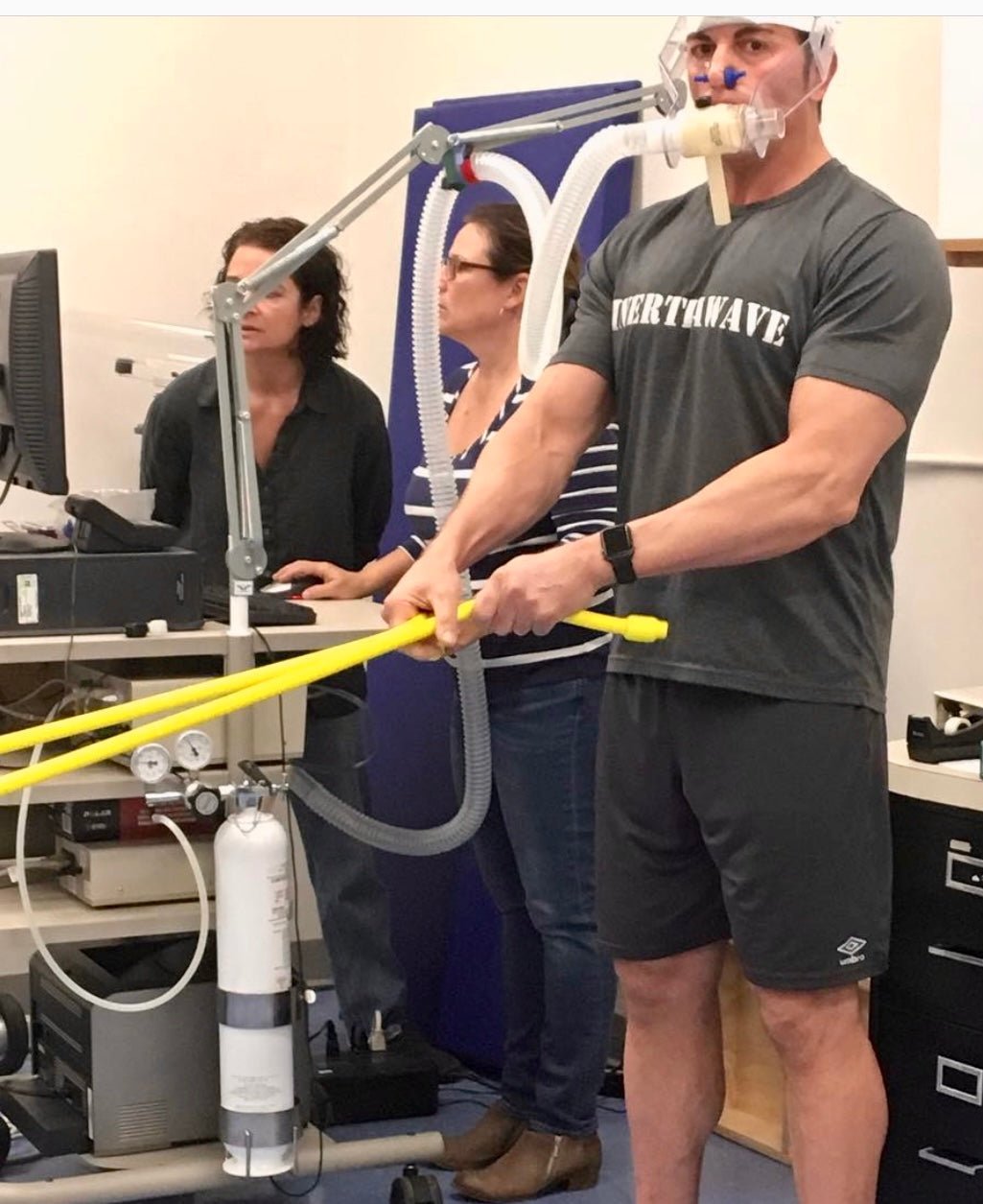
Research on high-intensity interval training supports the value of appropriately programmed short sessions. Gibala and colleagues reviewed physiological adaptations to low-volume interval training. In a separate study, Fountaine and Schmidt measured elevated metabolic demands during a 10-minute traditional battle-rope protocol.
Again, the battle-rope study did not test Inertia Wave. It demonstrates that repeated wave exercises can be metabolically demanding, not that the two products produce identical results.
What About the Afterburn Effect?
After strenuous activity, oxygen consumption can remain elevated during recovery. This is known as excess post-exercise oxygen consumption, or EPOC. Its size varies with the workout, especially its intensity and duration. It should not be treated as a promise of substantial extra calorie burning. Most of the energy used in a workout is expended during the exercise itself.
Inertia Wave vs. Traditional Battle Ropes
The two systems look similar because both create waves, but their materials and resistance characteristics are different.
| Feature | Traditional Battle Ropes | Inertia Wave |
|---|---|---|
| Material | Heavy rope | Lightweight elastic tubing |
| Resistance | Forces associated with moving and accelerating rope mass | Changing forces involving inertia, tension, and elastic wave motion |
| Portability | Generally larger and heavier | Compact and portable |
| Setup | Usually secured to a substantial anchor | SOLO and STRONG use suitable anchors; DUO is held by two people |
| Training Use | Conditioning, coordination, muscular endurance | Conditioning, coordination, muscular endurance, and partner or strength-work options by model |
Both can be challenging. Neither guarantees superior results on its own. Intensity, technique, progression, and consistency determine what you get out of a workout.
How to Control Your Intensity
There are no different tube strength levels assigned to different colors. Every Inertia Wave color has the same tube strength. The training challenge comes from how you use the equipment.
- Adjust your pace: build from smooth, controlled waves to faster rhythms as technique improves.
- Change the wave size: larger patterns can increase the movement demand, provided you can maintain control.
- Set the correct tension: follow the official anchoring and starting-position instructions for your model.
- Pay attention to stance: posture and foot placement affect stability and wave quality.
You'll often hear a distinctive whooshing sound when the tubes are moving rhythmically. It's a useful technique cue, but not a scientific measurement of workout effectiveness. For setup and positioning, use the official Inertia Wave workout library and exercise cues.
Three Ways to Train
SOLO
SOLO is the original anchored system for individual wave training. It can be used for conditioning, coordination, and core-focused exercise in an appropriately equipped space.
DUO
DUO is designed for two people, with no fixed anchor. Each person's movement changes the forces felt by the other. Both participants must follow the model's safety-strap and technique instructions. Never anchor DUO to a fixed object.
STRONG
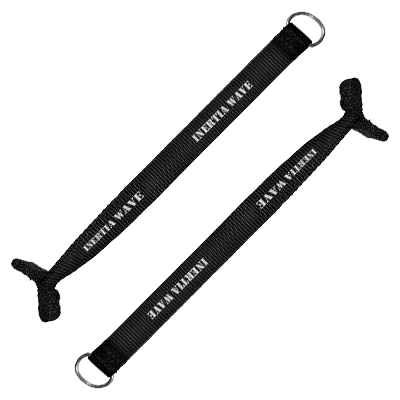
STRONG combines wave conditioning with interchangeable hand grips and belt attachments for additional resistance exercises. It allows a session to alternate between oscillating waves and strength movements.
A Sample 12-Minute Session
If you already know how to anchor the equipment and maintain a controlled wave pattern, this simple interval structure shows how the system can be used. It is an example, not a requirement or guaranteed result.
| Phase | Time | Activity |
|---|---|---|
| Warm-up | 2 minutes | Comfortable, controlled wave patterns |
| Intervals | 8 minutes | Eight rounds of 40 seconds of waves and 20 seconds of easy movement or recovery |
| Cool-down | 2 minutes | Ease the pace, then let the waves settle |
Beginners should start with shorter efforts and more recovery, mastering the beginner methods before moving to high-intensity work. Check the tubes and attachments before use, follow the instructions for your model, and stop if you cannot maintain safe, controlled movement.
Frequently Asked Questions
How does Inertia Wave create resistance?
Your movement produces traveling waves in elastic tubing. Motion, tension, deformation, and changing forces combine to create a resistance experience that you must continually control.
Does tube color change resistance?
No. All colors have the same tube strength. Movement speed, wave size, setup, and technique influence the challenge.
Is It a Battle-Rope Alternative?
Yes. It uses wave-based exercises, but elastic tubing creates a different response than a heavy rope. It is also much easier to transport.
Can a Workout Take Only 12 Minutes?
Yes. A short interval session can take about 12 minutes, although the right duration depends on your ability and goals. The equipment can also be used in warm-ups, longer sessions, and conditioning finishers.
Is Inertia Wave Low Impact?
Many exercises can be performed without jumping or repeated ground impacts. That does not mean the session is necessarily low intensity or suitable for everyone.
Has Inertia Wave Itself Been Clinically Studied?
The studies cited here examined interval training, traditional battle ropes, and other oscillating tools. They help explain relevant principles but do not establish Inertia Wave-specific clinical outcomes.
The Science Comes Back to Movement
Inertia Wave brings together kinetic energy, elastic wave motion, changing resistance, and coordinated muscular effort. The user doesn't simply move equipment from one place to another. The challenge is to start the waves, keep them rhythmic, and remain in control as the forces change.
Explore the Inertia Wave training systems or watch the official exercise demonstrations to see the different wave patterns in action.
Scientific References
- Moreside JM, Vera-Garcia FJ, McGill SM. Trunk muscle activation patterns, lumbar compressive forces, and spine stability when using the Bodyblade. Physical Therapy. 2007;87(2):153–163. Read study.
- Arora S, Button DC, Basset FA, Behm DG. The effect of double versus single oscillating exercise devices on trunk and limb muscle activation. International Journal of Sports Physical Therapy. 2013;8(4):370–380. Read study.
- Gibala MJ, Little JP, MacDonald MJ, Hawley JA. Physiological adaptations to low-volume high-intensity interval training in health and disease. The Journal of Physiology. 2012;590(5):1077–1084. Read study.
- Fountaine CJ, Schmidt BJ. Metabolic cost of rope training. Journal of Strength and Conditioning Research. 2015;29(4):889–893. Read study.
- United States Patent No. 10,981,029 B2. View patent.
Research context: Studies involving other oscillating tools and traditional battle ropes are provided to explain relevant physics and training principles. They do not establish product-specific clinical outcomes for Inertia Wave.


